The Insider's Guide to Women's College Rowing Recruiting
If your daughter rows and you've started Googling "college rowing recruiting," you've probably already discovered that the process is confusing, competitive, and weirdly opaque. The information out there is either too vague to act on or buried under so much jargon it's hard to know where to begin.
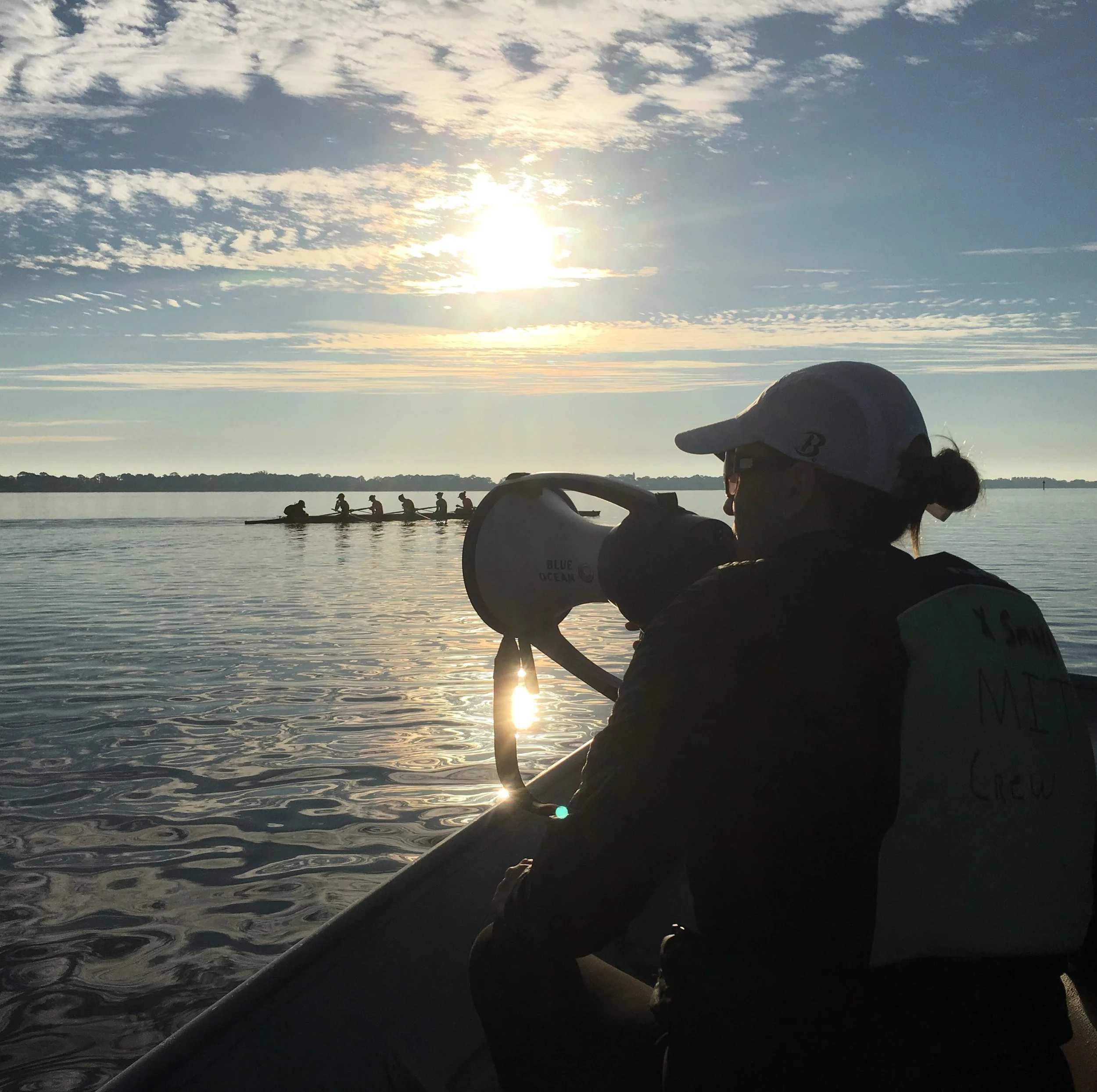
I'm Coach Claire. I spent 17 years coaching Division I women's rowing, including time at MIT. I've seen this process from both sides of the coach's desk. I founded Boston Coaching Project to give families the insider knowledge that most coaches can't (or won't) share publicly.
This is your starting point. Let's cut through the noise.
The families who succeed in this process aren't the ones always with the fastest athletes. They're the ones who understand how it actually works.
Myth #1: "My daughter just needs to get fast enough, and coaches will find her."
This is the most common and most costly misconception in college rowing recruiting. College coaches are not running national talent searches. They're managing relationships with athletes who have already contacted them, visited their programs, and demonstrated genuine interest.
The recruiting process is proactive, not passive. Even elite athletes can get overlooked if they don't know how to work the system. Here's what coaches are actually doing:
Managing a contact database of athletes who have reached out to them
Reviewing video that athletes have sent directly
Filling rosters by class year
Balancing academic profiles, erg scores, boat positions, and scholarship budgets simultaneously
Your daughter can be the strongest rower in her state and still miss her window if nobody knows she's looking.
Myth #2: "The recruiting process starts junior year."
For Division I programs, the meaningful recruiting window often opens much earlier and closes faster than families expect. The NCAA governs when coaches can contact athletes, but there's nothing stopping your daughter from reaching out to coaches long before that.
Here's a rough reality check by graduation year:
Class of 2029: Get organized. Research colleges and rowing programs - understand where your athletic and academic profiles fit and what you can do to improve your chances at reach schools/rowing programs. Work to improve your athletic profile - for rowers, strength and erg speed are key. For coxswains, recordings are a key to evaluation and improvement.
Class of 2028: Have your target list drafted, and begin outreach to coaches. Keep developing your athletic profile. Be organized in your outreach and communication. Respond promptly to coach inquiries and have all your admin materials organized and ready to send to coaches.
Class of 2027: The process should be actively underway. If not, start immediately. Build a target school list and start outreach right away. Some programs will be done recruiting ‘27’s, but not all. There’s still time, however there’s no time to waste!
Class of 2026: If you’re interested in rowing at the school you were admitted to, and have not reached out to coaches, now is the time. Don’t wait until you’re on-campus. It’s possible that a program will consider you for a walk-on roster spot, however that opportunity varies by program tremendously.
Myth #3: "Any good coach can get my daughter into her dream school."
Athletic recruiting gives coaches real influence in the admissions process; however it's not unlimited, and it works differently at every school. Understanding the distinction between academic fit and athletic fit is one of the most important things a family can do early in this process.
A few things worth knowing:
Coaches typically have a limited number of "slots" they can use to advocate for athletes in admissions and they spend them carefully
Academic thresholds vary enormously between programs. A coach at a highly selective school can't advocate for an athlete who falls significantly outside the academic profile of the admitted class
At some schools, the coach's word carries enormous weight. At others, admissions is far more independent
The families who navigate this well are the ones who build a balanced list, with schools where the athletic fit is real AND the academic fit is honest.
Athletic recruiting doesn't suspend academic standards. It opens a door. Your daughter still has to walk through it.
So what does a smart recruiting process actually look like?
At its core, successful college rowing recruiting comes down to three things:
1. Clarity on fit. What size program, what academic environment, what part of the country? Athletes who know what they're looking for make better decisions faster.
2. Proactive outreach. Coaches expect athletes to reach out first. A well-crafted initial email, sent at the right time, to the right programs will open doors that staying quiet never will.
3. Honest self-assessment. Knowing where your erg scores or coxswain skills, academics, and experience place you in the landscape is uncomfortable but essential.
There's a lot more to it than that, the timeline, the campus visit, the unofficial vs. official visit, what happens when a coach says "we're very interested", but those three pieces are the foundation.
Why I started Boston Coaching Project
In my many years visiting high school programs and attending races as a D1 coach, I heard all sorts of misguided and false information being passed around among parents. I heard high school club coaches who didn't understand college rowing recruiting explain it with false confidence to rowers and families. Or tell rowers that getting recruited is “easy”, then fail to give them any further guidance on what steps to take. Both rowers and coaches trusted that being fast was enough. I saw rowers who misread coach signals and lost spots to athletes who understood the process better.
I started BCP because the families who understand how recruiting really works get dramatically better outcomes. And most of that knowledge is sitting locked inside coaching offices.
My job is to get it to you.
Ready to understand where your daughter stands?
Start with our free resources at www.bostoncoachingproject.com or reach out directly. The best time to get clear on this process was six months ago. The second best time is today.
— Coach Claire
